Real-life examples

Athletes already carry the words that matter.

Long before Clutch Guard, athletes wrote short reminders on gloves, shoes, tape, and their hands to stay focused and respond to pressure.

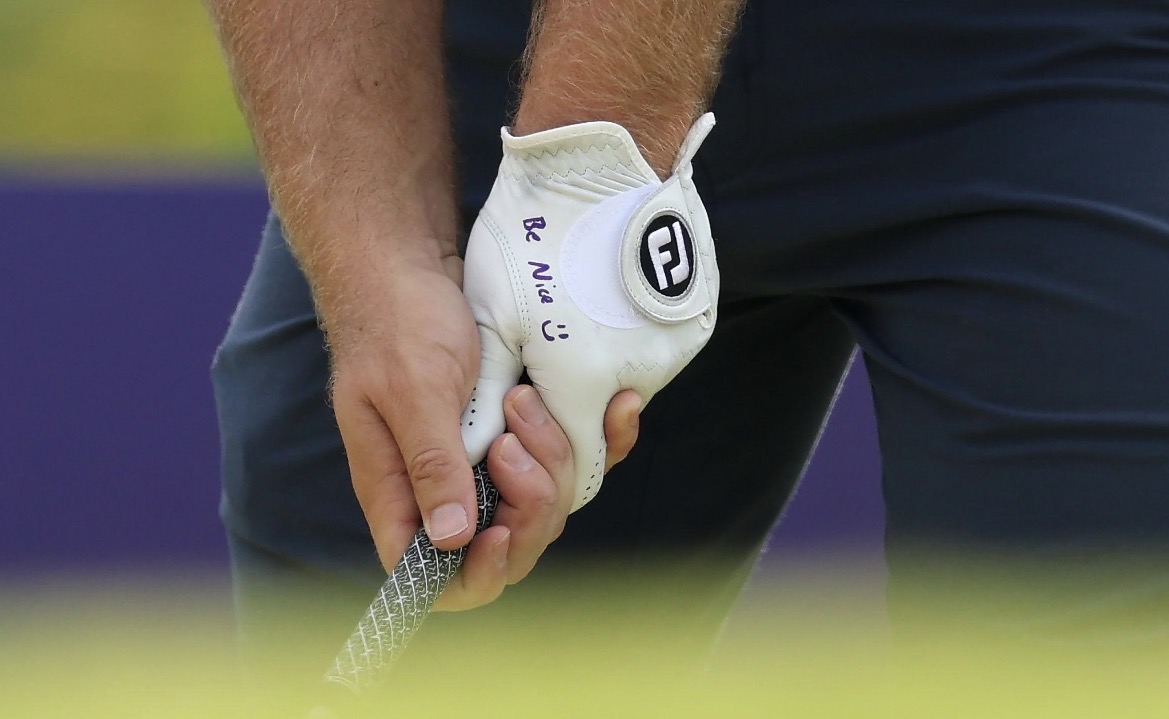
Golf glove with a short handwritten behavioral cue

Golf

Tyrrell Hatton

“Be nice :)”

After criticism for emotional reactions during competition, professional golfer Tyrrell Hatton wrote “Be nice :)” on his glove before a final round. The reminder was a direct behavioral cue designed to influence how he responded during difficult moments.
Baseball player at the plate with 'Still Alive' written on his wrist tape

Baseball

Jarren Duran

Personal messages written on both wrists

Boston Red Sox outfielder Jarren Duran has written deeply personal messages on his wrist tape before games, including “Still alive.” He has discussed the words in connection with his personal mental-health experience and his effort to keep fighting through difficult internal and external pressures.

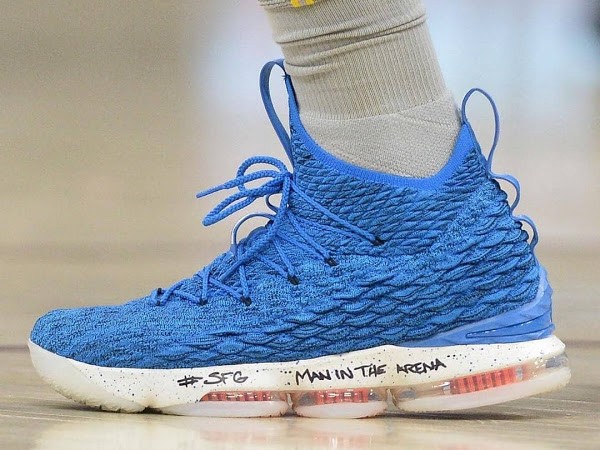
Blue basketball shoe with 'Man in the Arena' handwritten on the sole

Basketball

LeBron James

“The Man in the Arena”

LeBron James has said he writes “The Man in the Arena” on his shoe before games, drawing from Theodore Roosevelt's passage on courage, effort, and accepting criticism. The message functions as an identity cue — a reminder of what it means to compete while being judged from the outside.

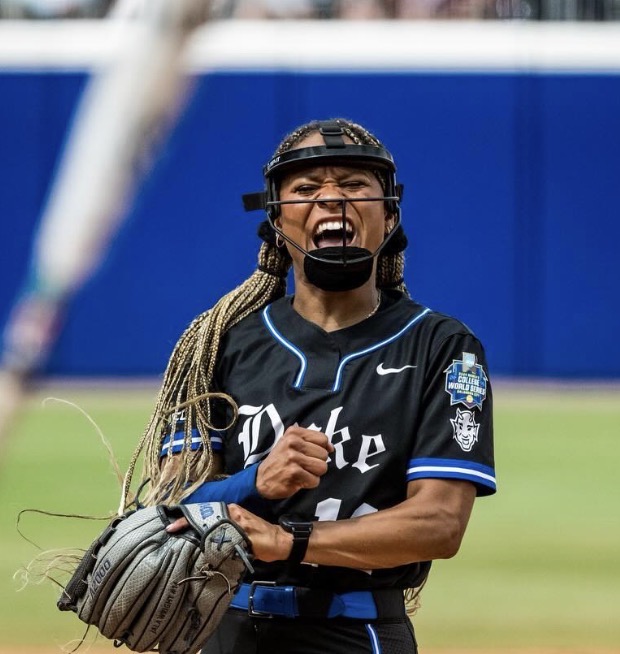
Duke softball pitcher #14 in mid-competition

Softball

Jala Wright

“PTB” — Pause. Think. Breathe.

Duke softball pitcher Jala Wright wrote “PTB” on her glove as a reminder to pause, think, and breathe during pressure situations. Because the cue was short and visible, she could return to it without leaving the moment. Her father reinforced the same breathing language from the stands, creating a simple, consistent reset.

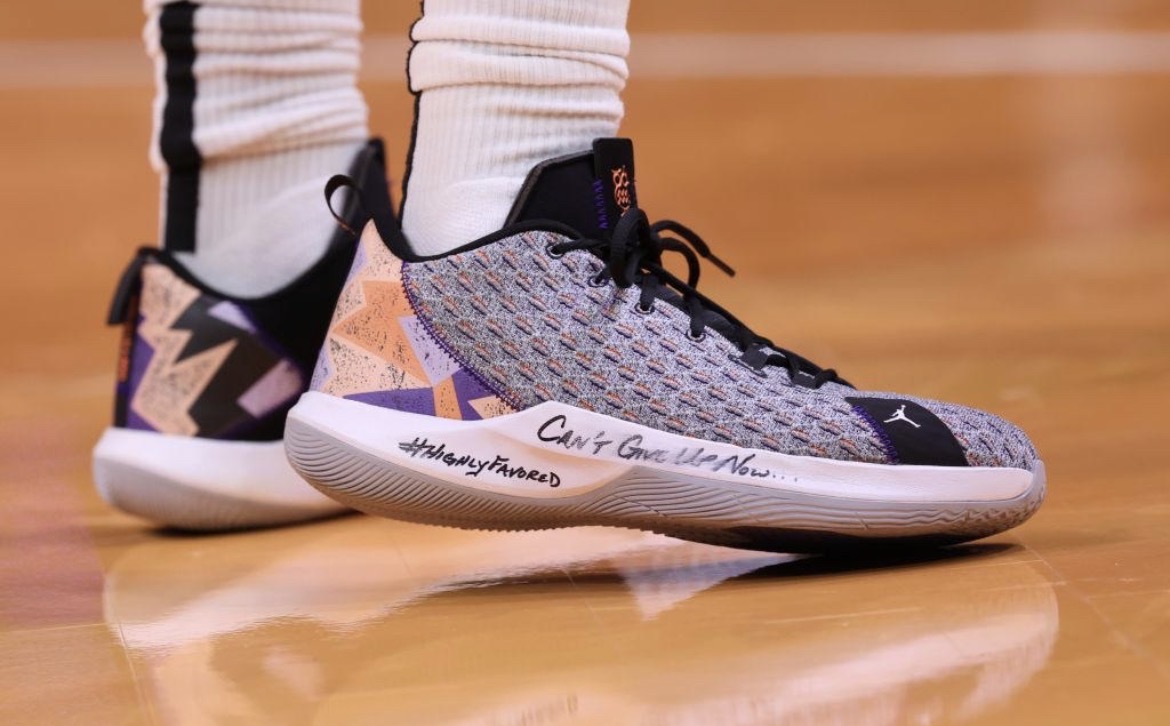
Basketball shoe with 'Can't Give Up Now' handwritten on the sole

Basketball

Chris Paul

“Can't Give Up Now”

Chris Paul has repeatedly written “Can't Give Up Now” on his basketball shoes, including during his first NBA Finals appearance. By returning to the same phrase across games, the message became part of his competition routine, not a one-time source of motivation.

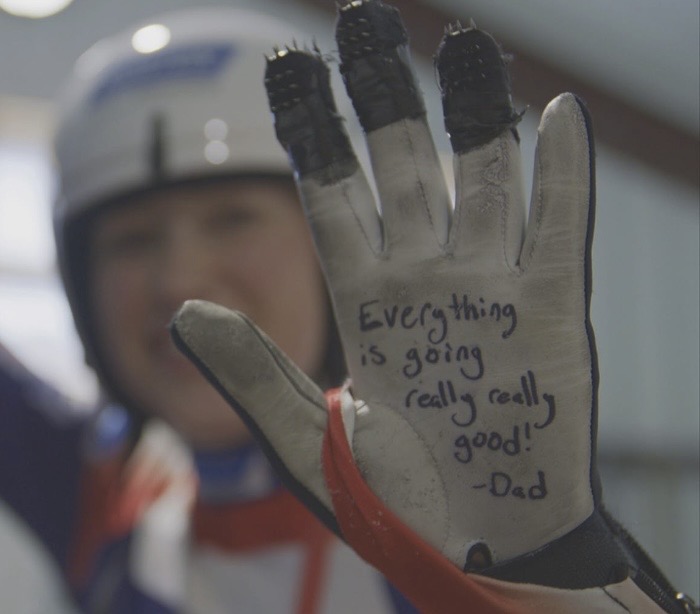
Luge athlete holding up a glove with a handwritten message from her father

Luge

Sophia Kirkby

Words from her late father written on her gloves

U.S. doubles luger Sophia Kirkby has written excerpts from her late father's final messages on the gloves she wears during competition. The words allow her to carry a meaningful voice and personal connection into each run.

1 / 6

The shared pattern

Different sports. Different words. The same instinct.

The messages vary, but the behavior is consistent. Athletes choose something meaningful, keep it short, place it somewhere visible, and return to it when the pressure rises.

  1. Step 1

    Choose something meaningful

    Start with the thought, instruction, identity, or reminder the athlete genuinely needs.

  2. Step 2

    Keep it short

    The cue should be easy to read, remember, and use during competition.

  3. Step 3

    Make it visible

    Place the reminder where the athlete can access it in the moment.

  4. Step 4

    Return to it

    Use the cue to reset, refocus, or recommit to the next action.

  5. Step 5

    Reinforce it over time

    Reflect on what worked, refine the words, and continue building the habit.

That's the behavior Clutch Guard is designed to support.

A note on these examples

The athletes shown on this page are real-world examples of competitors using visible reminders during training or competition. Unless explicitly stated, they are not affiliated with, sponsored by, or endorsing Clutch Guard.

These stories illustrate an existing athlete behavior. They don't prove that a written cue causes improved performance, and they don't suggest that Clutch Guard guarantees results. Select images are AI-generated or AI-enhanced for illustrative purposes.